- Pictures with Words
- Posts
- Song and Dance
Song and Dance
Scott Clayton
June 17, 2024
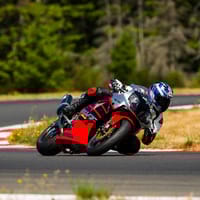
This idea came to me while I was doing one of my favorite daily activities. Walking my dog, Enzo, in the woods behind our neighborhood. Rhythmic Downshifts is the best way I can describe it in the fewest words. Followed by a linear decrease in engine speed (https://scotts-newsletter-c35485.beehiiv.com/p/revolutions-per-second) to the slow point. Like the sound of a falling bomb and the reverse sound accelerating away from the slow point. What the heck is a slow point?
Slow Point. A term I learned from Ken Hill. It is the point where your increasing lean angle and deceleration; ends. On a large radius corner for example, imagine a Cloverleaf Interchange, where two freeways intersect. The slow point here lasts a long time, five, maybe ten seconds. You’re done turning in and decelerating into the corner. Turning or decelerating anymore will run you off to the inside of the corner. You can’t accelerate, or release the turning because you’ll run off the road, to the outside. You just have to maintain what you are doing and let the vehicle go around the corner. This is the slow point. On a short radius corner, think turning right onto another street with the light giving you a green arrow. The slow point lasts just a fraction of a second.

I say “rhythmic” downshifts because my current downshifts are just random. And at the point where you would think I should be accelerating (the reverse bomb sound). My bomb just keeps going through the floor like a Wile E. Coyote and the Road Runner show. This is a sign of a late and or long of a Slow Point area. For this “Rythmic Downshifts” to be any benefit to me, I need to have reference points where I go to the brakes. The problem with me is, I only go to the brakes when I’m scared, no reference points. The feeling of being scared is random, just like my downshifts.
If riding a motorcycle is like a dance, then, even if it takes two to tango, there is still something missing. Music. Where does the music come from? It’s got to be the sweet song of the engine. Poor electric vehicle drivers, ha ha. And the braking reference points have to be the beat of the music. With that logic, I’m playing a song without a rhythm section.
To build more brake pressure on turn in, something my riding coach (Ken Hill) has said to me more times than I can count. Also, number four in the March 18th Newsletter (https://scotts-newsletter-c35485.beehiiv.com/p/im-working). I need to move my braking points farther down the track (closer to the corner), in baby steps. And I can’t do this without reference points. So you, and I, might be thinking: That will change the rhythm of the music which in turn will affect your dance. Yes. I am trying to dance to faster music. However, this requires more strength, because the braking forces will be higher.
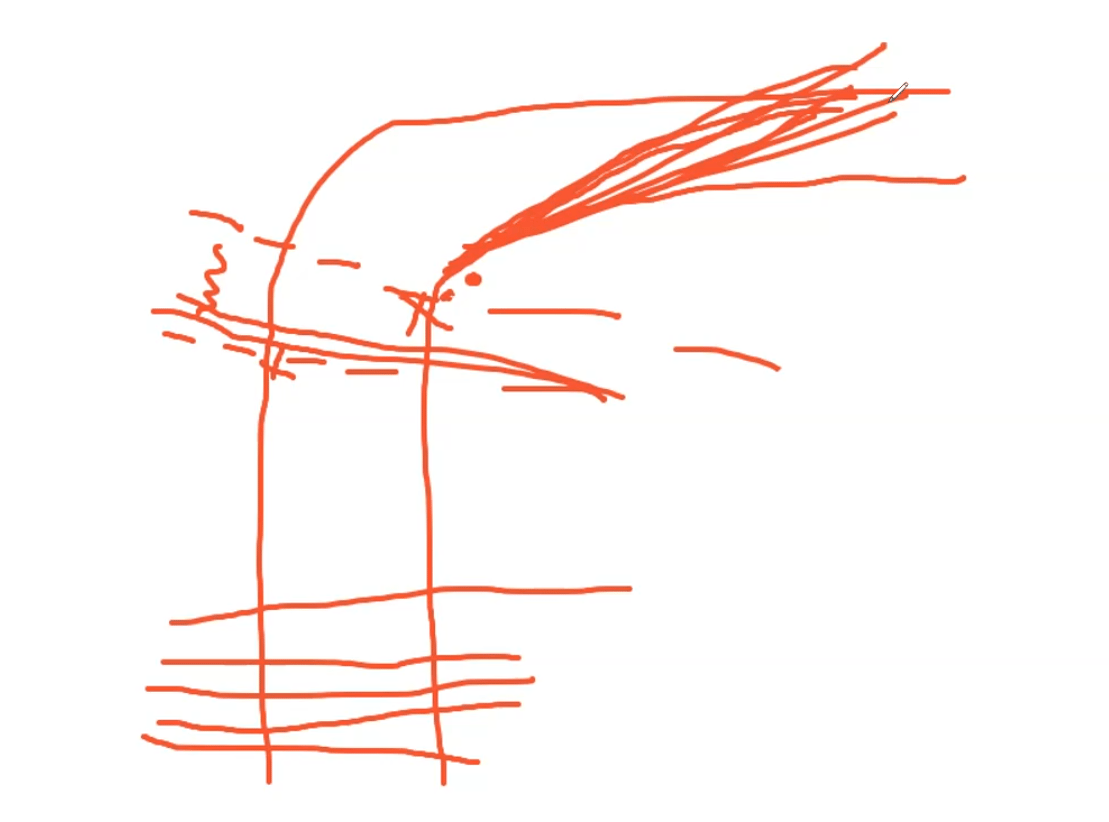
Ken Hill’s rendition of Turn 12 at The Ridge, a right hand corner. Not bad considering the circumstances in which he had to draw it. He is showing later braking points and thus, decreasing the Slow Point area. And then, the massive acceleration zones, of course.
I am finishing this Newsletter at the track. So, today (yesterday for you folks) I have written down on a track map reference points of where I usually get scared (go to the brakes). Examples include: The blue cone, the white line before the bridge, and just before asphalt patches.
Next, tomorrow, I need to start braking later, using the reference points gathered today, in the corners where my Slow Points are late, or long.
Reply