- Pictures with Words
- Posts
- Understanding Last Week's Challenge
Understanding Last Week's Challenge
Scott Clayton
December 29, 2025
In last week’s challenge towards the bottom of the newsletter I said, “You have more grip with less steering wheel rotation.” To be more specific, you have more grip available for deceleration and acceleration with less steering wheel rotation. It was an assumption that you remembered a sentence I said in the opening paragraph. Which was, “The more you have of it [steering & lean angle], the less you can use to brake (decelerate) or accelerate.”
Both of these sentences say the same thing only in different ways. They are also the foundation of driving when traction (grip) becomes scarce. Because it’s winter time we are sticking with the car analogy, even though lean angle and steering wheel rotation are the same.
Commuting on the streets we all drive well under the limits of grip. You don’t have to, but you already know what that leads to. Annually, in the northern parts of the county it’s hard to drive well under the limits of grip. Another place where grip becomes scarce is the racetrack.
In these environments where grip is few and far between, either sought out for pleasure or forced to commute in; is where we fine tune our driving skills.
Some people use points, some people use dollars. I’m going to use percentages to explain amounts of directional grip within the total amount of grip.
Removing all nuances and specialty tires. And to keep this as simple as possible, we are going to say that your everyday typical tire has the most grip on a hot sunny day. This will be our reference standard and call it 100% of grip available. Next will be driving on snow, with a total amount of grip being 10% compared to that hot sunny day. And lastly, ice. With a total amount of available grip being 1%
100% of available grip is where you can deliver a forgotten bottle of water from the backseat to the front seats by using the brakes. And on ice (1% of available grip), a mouse fart could send you spinning out of control. I hope you can see the amount of forces the car’s tires can handle are directly correlated to the amount of available grip.
Let’s go to the ice where it’s like you are walking on egg shells with the car’s controls. Sneaking up and tip-toeing with the accelerator, steering wheel and brake; to get the car to go where you want. If on the ice you are using all of that 1% available grip to turn, the tires are doing everything they can to turn the car. There is NOTHING available for acceleration or deceleration. However, if you are using 0.5% of grip to turn and need to slow down, lifting off the accelerator could give you that other 0.5% to slow down. Where lightly applying the brakes could give you 0.6% or more which will exceed the total 1% of available grip. Causing the car to NOT act in accordance with your desires.
This part ties into last week’s challenge, so listen up.
But maybe… That 0.5% of deceleration (letting off accelerator) could give you the extra rotation you were looking for, allow you to finish your turn earlier, thus allowing you to straighten the steering wheel, so now you are using 0.0% for turning and have 1% for either acceleration or braking.
Driving this way (on ice) is where the professional racers live, only with extreme forces applied. Acting as if a mouse fart could send them off the track and applying enough force to send that water bottle through any window. They are always testing the limits of the available grip, because that’s the environment where the lowest lap time lives.
I don’t need to go over the snow (10%) and the hot sunny day (100%). It’s the same as ice, only with significantly more forces (braking, turning and acceleration) at each step in percentages of available grip. You can fill in the gaps with rain on a cold day, rain on a warm day, cool dry day, warm dry day, etc.
Last week’s newsletter was meant to be a, “do it”. This week’s newsletter is meant to be an, “understand it”.
I’m going to butcher this. However, I will leave you with this:
George Grass has an awesome saying that goes something along the lines of, drive the car slow as if you were going fast and eventually you’ll drive the car fast as if you were going slow.
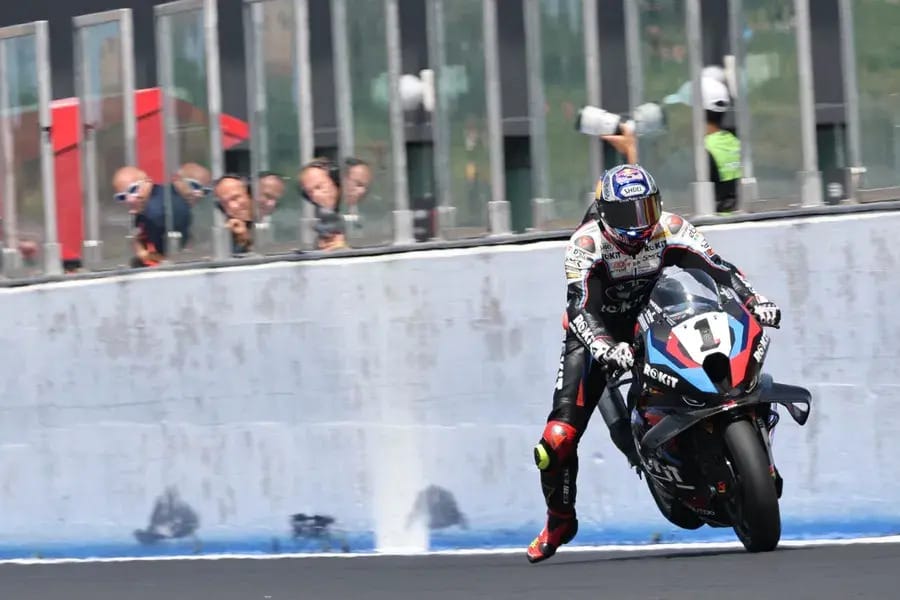
Here’s Toprak, someone who is comfortable in the environments where the lowest lap times live. (Picture credits unknown, copied from the internet with no credits visible)
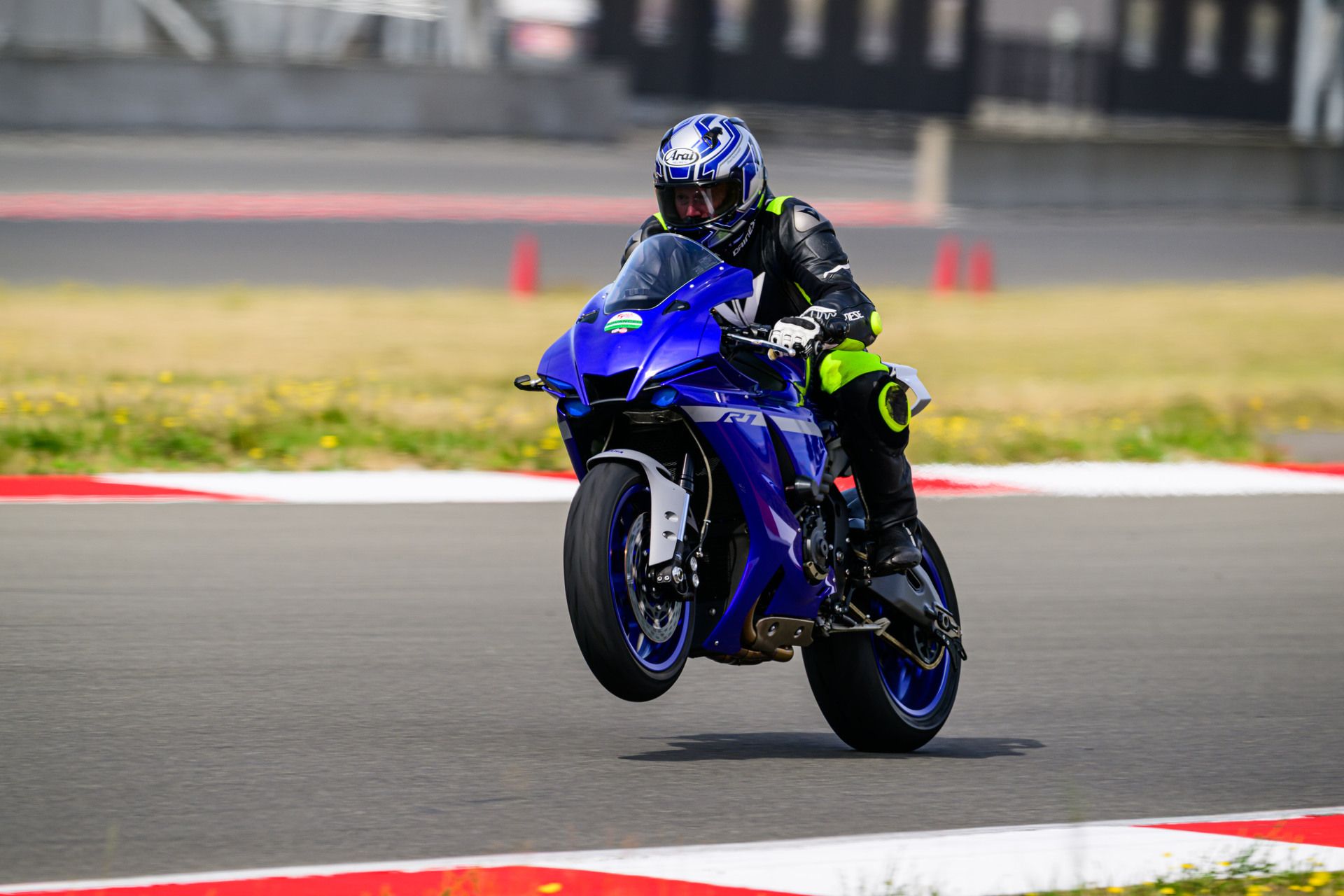
Here’s me, someone who only exceeded the limits of grip for a couple of brief moments and wasn’t comfortable doing it; unlike Toprak. Photo by G. Powers Photography.
Reply