- Pictures with Words
- Posts
- Fuel Dilution
Fuel Dilution
Fuel in your Oil
Scott Clayton
February 26, 2024
Having fuel in your engine’s oil, lowers the viscosity of your oil. Not good. You already pick out a recommended viscosity for your vehicle. Fuel dilution is usually caused by fuel delivery problems, such as dirty or poor performing injectors. Fuel dilution also happens on the startup of every cold engine, even on a brand-new engine! But that’s ok, if you are going to use your engine until it is thoroughly warmed up.
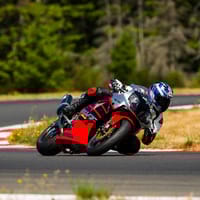
When I got my new R1 with zero miles on it, I changed the oil frequently during the break-in process, and sent in oil samples to Speediagnostix each time. Now, I send in a sample at the end of the track day season.
I learned of fuel dilution with oil samples from other bikes but I never thought it was from letting the bike idle in the garage. I thought it was due to having a lot of miles on the clock. Looking back now, knowing what I know now, it all makes sense.
When I saw a yellow flag (borderline values) for fuel dilution on my new R1. I was thinking WTF? I remember watching a YouTube video of a guy performing an oil sample process with another oil analysis company. He said you can’t idle your car then take the sample. You need to drive it around the block; first. I was saying to myself, “But most motorcycle manuals, if not all, tell you to warm up the bike for several minutes before performing an oil change.” I assumed this meant idling your bike in the garage.
Ah-ha, the first couple of oil samples were taken just after riding around on the streets, fuel dilution values were given the green flag. The next couple of oil samples that were showing borderline fuel dilution values, were from samples where the bike was cold and just idling in the garage.

It turns out that idling your bike in the garage for an oil change (no sample), is OK. Because you are going to drain that oil and put in fresh oil.
So how do you know when your engine is thoroughly warmed up? I know when my truck is thoroughly warmed up, because the oil pressure gauge drops to its normal operating pressure. This is even five to ten minutes after the coolant is up to normal operating temperature. You may say, ”But my vehicle doesn’t have an oil pressure gauge!” Yeah, I understand that. I don’t know of any motorcycle that comes stock with an oil pressure gauge. Even my wife’s Benz doesn’t have an oil pressure gauge.
How does fuel dilution happen to a cold, healthy engine, with good injectors? I don’t know. But with Kevin Cameron’s help and a little bit of logic. I think I can figure it out.
Engines run poorly when they are cold because the engine’s metal parts are too cold to evaporate much of the fuel. The vapor part of the mixture is therefore lean, and the result is non-starting or the dreaded start-and-stall. To make a cold engine start, therefore, the mixture must be enriched in some way. Recent electronic fuel injection does this automatically, but older engines have chokes for cold-starting.
I could be wrong but I remember Kevin Cameron also saying something about fuel clings to cold metal. The fuel in the tumble on a four (or more) valve engine or a two valve swirl engine, would cling to the cold cylinder walls. So more fuel is needed to ignite the combustion process. That fuel on the cold cylinder walls probably gets scraped down to the oil in the oil pan by the piston rings. Again, I could be wrong about this.
So how does the fuel dilution go away in a thoroughly warmed up engine? Listen to what Lake Speed Jr. has to say:
“It is the oil temperature that evaporates the fuel out of the oil”
Here are some of Lake Speed Jr.’s videos:

Interested in getting your oil analyzed? Go to:

If you love motorcycles, vintage or new, Kevin Cameron is fun to read. He can put a paragraph of knowledge into a sentence. So reading one of his books is like getting a full encyclopedia of knowledge. “Sportbike Performance Handbook 1st edition” and “Classic Motorcycle Race Engines: Expert Technical Analysis of the World's Great Power Units” are my favorites.

He also has a new book that I need to buy: https://superbikebook.com/
Edited February 23rd, 2025. -The un-evaporated fuel form fuel droplets in a cold cylinder, that unfortunately wash some the oil off the cylinder into the oil pan. Also, the ring end gaps are still wide open, allowing fuel to enter the oil pan, according to Lake Speed Jr.
Reply