- Pictures with Words
- Posts
- Challenge Explanation
Challenge Explanation
Anti-Rock Back
Scott Clayton
January 19, 2026
What’s Actually Happening?
When you go to the brakes the weight transfers to the front tires and suspension. This causes the car to pitch, nose down. The more you press on the brake pedal, the more the nose of the car drops.
How to do it?
I kind-of let the cat out of the bag last week by saying, “Tie the nose of the vehicle to the amount of brake pressure you are applying.” So, if you want the nose of the vehicle to rise smoothly, you need to release the brake pedal smoothly.
For example, let’s say you are using 75% of maximum brake pressure, but now you are ready to release the brake pedal. If we were to record the brake pressure at every “split second" (non-scientific, arbitrary length of time). It would look something like this: 75%, 50%, 25%, 10%, 5%, 4%, 3%, 2%, 1%, 0%.
Notice how in the initial release of the brake pedal, there was a significant drop in brake pressure every split second. And in the final parts of the brake release there was a small drop in brake pressure per split second. This is how it’s done!
For visual or “pictures with words” type of people, here’s a graph of brake pressure vs time:

This is a typical graph of camshaft lift vs time. Camshafts are designed to softly release the valve onto the valve seat - just like how we release the brake pedal (brake pressure vs time).
Why is this important?
For Street Drivers: These small increments of brake pressure release per split second allows time for proper unloading of the tires, and suspension. If you use this same technique, releasing the brake as you turn into a corner, you will feel a sense of calmness within the vehicle; which delivers you confidence.
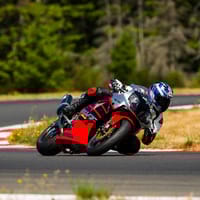
For Track Riders: You’re using the brakes coming into the corner because the weight transfer gives you that increase in contact patch (grip) in the front tire. If you abruptly let off the brakes, the weight transfers to the back, you lose your increased contact patch and thus, your grip.
Who Cares?
For those of us who find ourselves in situations of low grip or travel to racetracks to seek the limits of grip; not observing this technique will quickly find themselves with zero grip.

Reply